
.svg)
.svg)
In interior design, the obvious moves are easy. A statement sofa. A hero artwork. A dramatic kitchen island in a material that announces itself the moment you enter the room. These are the elements that appear in the renders, anchor the mood boards, and make an immediate impression. They matter. But the interiors that genuinely endure — the spaces that feel better the longer you spend in them, that reveal themselves slowly and reward sustained attention — are defined by something considerably more elusive. The unexpected detail. The decision that only becomes visible once you've been in the room long enough to start noticing what's actually there. The finishing touch you might not consciously register, but would absolutely feel the absence of.
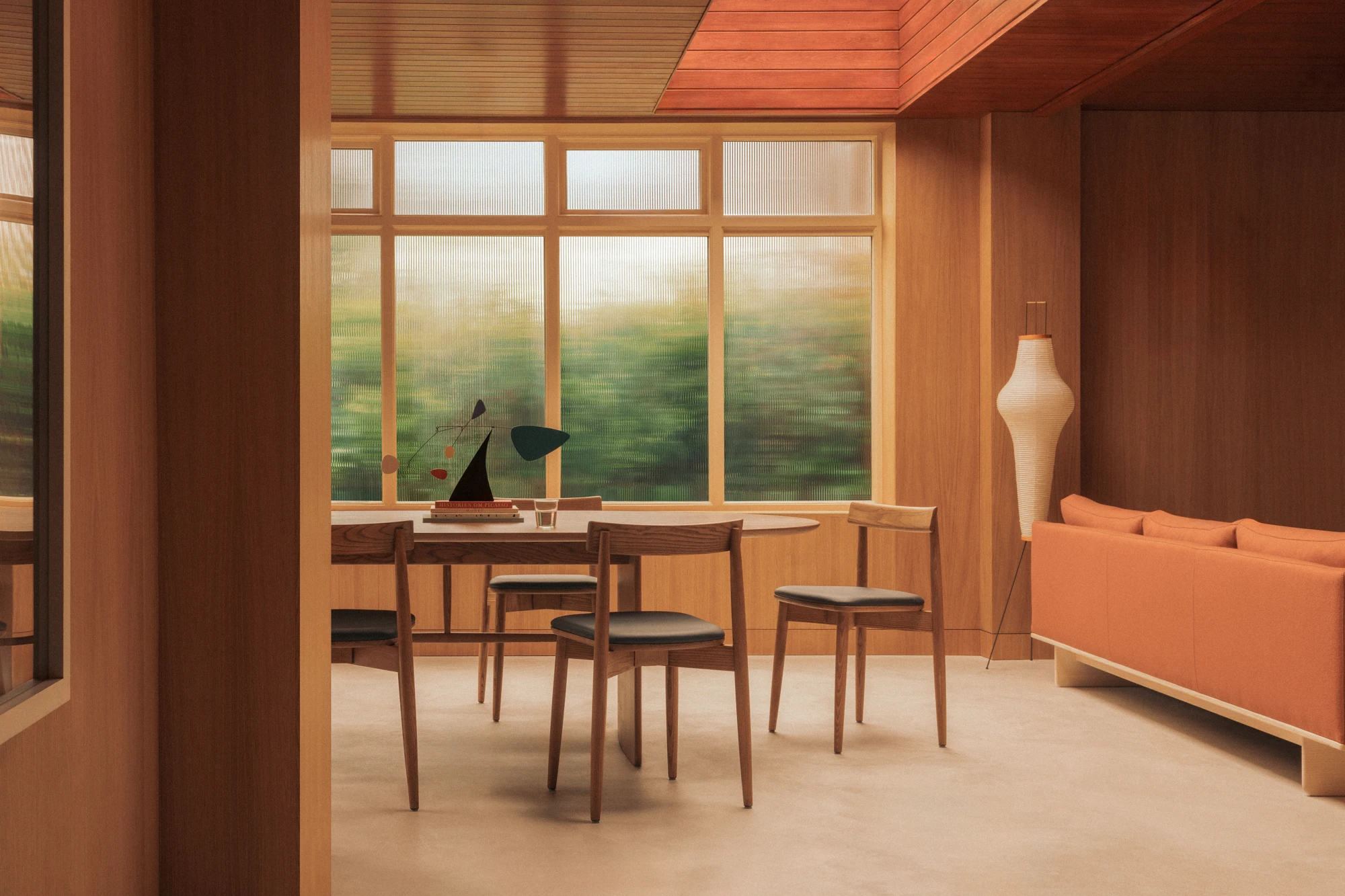
The ceiling is one of the most consistently overlooked surfaces in both residential and commercial interior design. It covers the entire footprint of the room. It governs the quality and behaviour of light throughout the space. It sits in the peripheral vision of everyone who inhabits the room. And in the vast majority of interiors — including many that are expensive and otherwise well-considered — it's painted white and forgotten. The most considered designers treat the ceiling as a fifth wall, a design opportunity with as much potential as any other surface in the room. A limewash plaster finish that adds subtle texture and atmospheric depth. Exposed structural elements treated as deliberate architectural features rather than problems to be concealed. A timber batten ceiling that introduces warmth, acoustic softening, and a material richness that transforms the entire register of the space. A plaster cornice that references the history of a building while remaining entirely contemporary in its execution. These treatments change the way light behaves. They add intimacy or drama depending on how they're handled. And they signal, unmistakably, a level of design thinking that extends beyond the surface of things.
Where one material meets another is one of the most telling moments in any interior. A thoughtful transition — a recessed shadow line, a brass inlay, a deliberate reveal at the junction of two planes — communicates craftsmanship and intentionality in a way that no individual material, however beautiful, can achieve in isolation. A clumsy one communicates the opposite, regardless of how expensive the materials on either side of it might be. These junctions are where the quality of the design thinking becomes most visible to the people who understand interiors: the junction between floor and wall, the connection between joinery and stone, the edge of a bath surround, the place where a ceiling plane meets a bulkhead. Each is an opportunity for a detail that elevates — or a detail that quietly, persistently deflates.
Architectural lighting — lighting integrated into the structure of a space rather than sitting on top of it — is one of the most powerful and most underutilised tools in luxury interior design. A recessed perimeter channel that washes a wall in warm light, eliminating shadows and adding apparent volume to the room. Concealed strip lighting beneath a floating joinery piece that makes it appear to hover above the floor. A carefully positioned downlight that pools light on a dining table with the precision of a theatre spot. These are not lighting solutions in the utilitarian sense — they're design decisions with architectural consequence, capable of transforming the spatial quality of a room as profoundly as any structural intervention.
The handle of a door. The weight of a tap. The smoothness of a drawer mechanism. The resistance of a cabinet pull. These are the haptic moments that the people who inhabit a space interact with dozens of times every day, and they communicate quality — or its absence — more directly and more repeatedly than almost any other design element. A beautifully specified interior with poor hardware is something like an impeccably tailored suit with cheap buttons: the detail undermines the whole, and the people who notice these things, notice. In a market where high-quality rendering and photography can make almost any interior look impressive, the differentiator is increasingly what can't be captured in an image. The things that are felt, not seen. The cumulative effect of details that are right, all the way down. That is what tips a response from admiration to genuine desire — and in luxury design, genuine desire is the only metric that ultimately matters.
Image Credit: Christian Mandersen